
• Skip to Content
  • Skip to Main Navigation
  • Skip to Search

Indiana University Bloomington Indiana University Bloomington IU Bloomington

Open Search
  • About
    • Welcome
    • Leadership & Staff
      • Staff Advisory Board
    • Departments, Centers & Institutes
    • Vision and Strategy
      • Integrating International Affairs and Area Studies
      • Building Academic and Professional Skills
      • Fostering Civil Discourse and Public Service
    • School History
    • Our Founding Spirit
    • Richard G. Lugar
    • Founding Dean
    • Dean's Advisory Council
    • Social Media
    • Contact
  • Academics
    • Undergraduate
      • Majors, minors & more
    • Graduate
      • Master's Programs
        • Certificates
        • Dual Degrees
      • Doctoral Programs
        • Minors & Certificates
      • Student Portal
    • Foreign Language Studies
    • Study Abroad
      • Short-Term Study Abroad
      • Semester Abroad
      • Planning to go Abroad
        • Application Process
        • Funding Study Abroad
        • Pre Departure
        • Returning to HLS
        • Policies
      • Incoming Exchange to HLS
        • Eligibility
        • Nomination
        • Application
        • Cost
        • IU Academic Calendar
        • After Admission
        • Life at Hamilton Lugar
      • News & Events
    • Courses
    • Peace Corps Prep
    • Academic Advising
    • Scholarships
      • FLAS Fellowships
  • Admission
    • Undergraduate Admissions
    • Graduate Admissions
    • Scholarships + Financial Aid
    • Student Ambassadors
    • Visit + Contact Us
    • Hamilton Lugar Day
  • Student Life & Support
    • Peer Mentors
    • Engaged Learning
    • Clubs and Groups
      • HLS Global Development Consulting
      • Student Organizations & Activities
      • Sigma Iota Rho (SIR)
      • HLS Student Government
    • Student Resources
    • HLS Living-Learning Center
  • Careers
    • D.C. Global Leadership Forum
    • Building Careers in International Development
    • Internships
      • Partners
      • Internship Placement Program
      • HLS Internships Abroad
      • Internship Course
      • Non-HLS Internships
  • Faculty
    • Faculty Governance
      • NTT Faculty Criteria
    • Standing Committees
    • Faculty Books
  • News
  • Events & Calendars
    • America's Role in the World
    • Global & Area Perspectives (GAP) Symposium
    • Hamilton Lugar Themed Series
      • Security
      • Movie Nights
      • World Languages
    • Global Simulations
  • Alumni & Giving
  • Give Now
  • Insights

Hamilton Lugar School
of Global and International Studies

  • Home
  • About
    • Welcome
    • Leadership & Staff
    • Departments, Centers & Institutes
    • Vision and Strategy
    • School History
    • Our Founding Spirit
    • Richard G. Lugar
    • Founding Dean
    • Dean's Advisory Council
    • Social Media
    • Contact
  • Academics
    • Undergraduate
    • Graduate
    • Foreign Language Studies
    • Study Abroad
    • Courses
    • Peace Corps Prep
    • Academic Advising
    • Scholarships
  • Admission
    • Undergraduate Admissions
    • Graduate Admissions
    • Scholarships + Financial Aid
    • Student Ambassadors
    • Visit + Contact Us
    • Hamilton Lugar Day
  • Student Life & Support
    • Peer Mentors
    • Engaged Learning
    • Clubs and Groups
    • Student Resources
    • HLS Living-Learning Center
  • Careers
    • D.C. Global Leadership Forum
    • Building Careers in International Development
    • Internships
  • Faculty
    • Faculty Governance
    • Standing Committees
    • Faculty Books
  • News
  • Events & Calendars
    • America's Role in the World
    • Global & Area Perspectives (GAP) Symposium
    • Hamilton Lugar Themed Series
    • Global Simulations
  • Alumni & Giving
  • Search
  • Give Now
  • Insights
  • Home
  • Insights
  • Faculty Q&A: Amadou Beidy Sow

Faculty Q&A: Amadou Beidy Sow

Wednesday, December 10, 2025

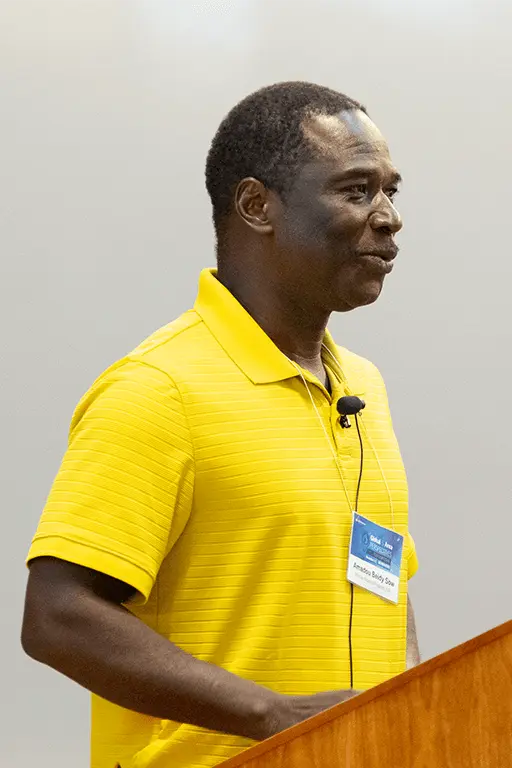
Photo of Amadou Beidy Sow

France in the Sahel: Rethinking old strategies

Why are France and its Western counterparts facing difficulties in the Sahel? 

Stretching from Mauritania to Eritrea, the Sahel is one of Africa’s most fragile regions. For years, France was seen as a stabilizing force—a partner to fragile states, a barrier against terrorism, and a protector of Western interests. Today, this vision is collapsing under political disruption, local resentment, and a changing global landscape. What was supposed to strengthen France’s ties with Africa has become a burden, exposing military and diplomatic limitations. While many experts cite conflict, poverty, unemployment, democratic failure, and climate stress, these outcomes were predictable. France’s first intervention came in 2013 at Mali’s invitation to stop terrorist advances toward the capital. Operation Serval was initially welcomed by most Malians. However, France’s failure in the Sahel stems from cumulative political neglect, lack of transparency, and paternalistic behavior. Without decisive regional and international action, instability will worsen. 

What are the root causes of the Sahel’s issues? 

Climate stress is often blamed, and drought has worsened hardship. But the Sahel’s role in global geopolitics is key. The region holds vast resources—minerals, oil, and gas—that attract global powers. As early as 1957, leaders noted immense riches beneath the sand. Today, France, Russia, China, and others compete for influence. This rivalry, combined with weak governance and poverty, fuels conflict. The official narrative of fighting terrorism has shifted, raising doubts about real motives. Why deploy overwhelming force against small militant groups? Strategic interests, not security alone, seem to drive engagement. 

How can France and its Western counterparts repair their relationship with the Sahel? 

France’s image in the Sahel is badly damaged but repairable. It requires cultural, political, and psychological change. Above all, France must abandon condescending attitudes. Operation Barkhane, launched in 2014, was widely seen as a neocolonial project, worsening tensions. Moving forward, France and its allies should acknowledge colonial legacies and past mistakes. They must respect regional bodies like the Alliance of Sahel States (AES) and ECOWAS instead of bypassing them. Genuine dialogue—not imposed solutions—is essential. 

How can France and its allies open a channel for constructive dialogue with the AES? 

Not all Sahelian communities oppose France or the West. Trust will grow through humility and cooperation. Development programs should take priority over military campaigns. Local voices must shape solutions, and benefits should reach ordinary people—not just elites. Academic institutions and civil society can foster honest communication. The principle is simple: listen more, lecture less. Replace paternalism with partnership to turn the Sahel from a zone of crisis into a region of opportunity. 

About the author: Amadou Beidy Sow is a senior lecturer of Bamana in the Hamilton Lugar School’s African Studies Program.  

Hamilton Lugar School of Global and International Studies social media channels

  • Facebook
  • Instagram
  • YouTube
  • LinkedIn

Contact, Address and Additional Links

Explore

  • Admissions
  • Departments, Centers & Institutes
  • Faculty
  • Foreign Language Studies
  • Graduate Programs
  • Undergraduate Programs
  • Contact

For Students

  • Academic Advising
  • Career Development
  • Classes
  • FLAS Fellowships
  • Scholarships
  • Study Abroad
  • Student Clubs
  • Student Resources

For Faculty/Staff

  • Communications Support
  • Digital Slides
  • Faculty & Staff Intranet
  • Request Forms

Connect

  • News & Events
  • Give Now

HAMILTON LUGAR SCHOOLBLOOMINGTON

355 North Eagleson Avenue
Bloomington, IN
47405-1105
Email: hls@iu.edu
Phone: (812) 856-7900

Indiana University

Accessibility | College Scorecard | Open to All | Privacy Notice | Copyright © 2025 The Trustees of Indiana University